
Here’s a fully structured, SEO-friendly article for your topic:
Mood rings have fascinated people for decades, but they are far more than just trendy accessories. Each color tells a story about your emotional and physical state. One of the most soothing and universally sought-after colors is blue. In this guide, we’ll explore everything about the blue mood ring meaning, how to interpret it, and what it reveals about your inner calm and emotional balance.
What Does a Blue Mood Ring Mean?
A blue mood ring reflects tranquility, peace, and relaxation. The thermochromic liquid crystals in the ring react to your body temperature, signaling your emotional state through color. When your ring turns blue, it’s often a sign that you are:
- Calm and relaxed: You feel balanced and in control of your emotions.
- Confident and trustworthy: Blue is associated with honesty, reliability, and openness.
- Emotionally stable: Your mind is clear, and stress is minimal.
Blue represents one of the most positive emotional states a mood ring can indicate, suggesting that you are in harmony with yourself and your surroundings.
Shades of Blue and Their Meanings
The shade of blue can add more nuance to your mood interpretation:
| Shade of Blue | Emotional Meaning |
|---|---|
| Dark Blue | Deep calm, introspection, and emotional stability |
| Bright Blue | Happiness, optimism, and a playful, open-hearted mood |
| Pale or Sky Blue | Relaxed, peaceful, and sensitive emotions |
| Indigo or Blue-Violet | Creative energy, intuitive thinking, and spiritual awareness |
Understanding the shade helps you read subtle changes in your emotional state throughout the day.
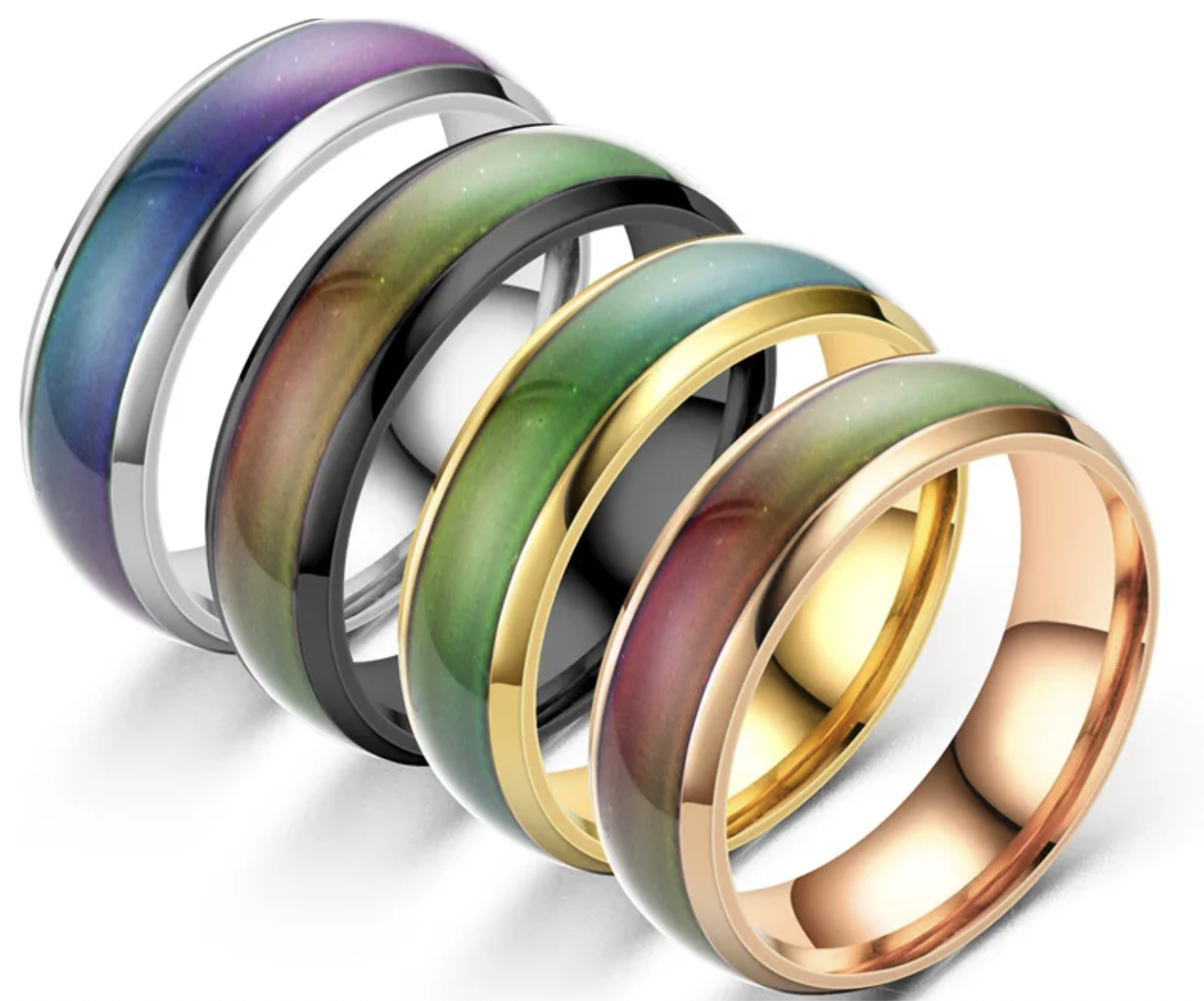
Mood Ring Changing Color
Discover the magic of a mood ring that reflects your emotions in real time. This stainless steel color changing ring reacts to your body temperature, revealing different shades that represent your feelings. If you’re searching for mood ring colors meaning, this ring makes it fun and stylish to see your mood shift throughout the day.
How to Use Your Mood Ring Effectively
- Observe Regularly: Check your ring at different times to notice patterns in your mood.
- Reflect on Your Day: When the ring turns blue, take a moment to appreciate your calm state or analyze what is helping you stay balanced.
- Pair With Mindfulness: Blue can signal an ideal time for meditation, deep breathing, or journaling.
- Track Emotional Trends: If your ring frequently shifts away from blue, it might indicate stress or emotional imbalance to address.
Why People Love Blue Mood Rings
- Stress Indicator: Blue rings signal calm, helping you monitor and maintain stress levels.
- Fashionable & Functional: Offers both style and emotional insight.
- Conversation Starter: People are naturally curious about the meaning behind the color changes.
Wearing a blue mood ring is not just about aesthetics—it’s a tool for emotional awareness.
FAQs About Blue Mood Rings
Q: Can blue rings indicate sadness?
A: Generally, blue reflects calm, but a very dark or dull blue may indicate introspection or a need to process emotions.
Q: How accurate are mood rings?
A: Mood rings react to temperature, which is influenced by emotions. While not a scientific diagnostic tool, they give a general idea of your mood trends.
Q: Does blue mean the same for everyone?
A: Mostly yes—blue is universally associated with calm, peace, and trust—but interpretation can vary slightly depending on personal and environmental factors.
A blue mood ring is more than a stylish accessory—it’s a personal guide to emotional balance. When your ring shines blue, it’s a reminder to embrace calm, maintain harmony, and appreciate moments of peace. Keep observing, reflect on your emotions, and let your mood ring help you stay mindful and balanced throughout the day.
SEO Keywords: blue mood ring meaning, mood ring color chart, calm mood ring, peaceful mood ring, emotional balance
If you want, I can also make a visual color chart for all mood ring colors with their meanings that pairs perfectly with this article for social media and Pinterest promotion. It would boost engagement and retention.